
The Lean Leader Green Belt Series are designed and developed specifically for Team Leaders and Supervisors. These series are at a higher standard than the shop floor series. When a staff member completes all the 12 modules he / she can be awarded a "Lean Leader" certificate and can lead his team in the successful application of various Lean principles.
The 12 are modules:
1. Lead Change – 116 slides
2. Implement a Lean System – 44 slides
3. Facilitate Continuous Improvement – 46 slides
4. Problem Solving – 40 slides
5. Lead 5S – 72 slides
6. Improve Cost Factors – 50
7. Facilitate Quick Changeovers – 70 slides
8. Facilitate JIT – 46 slides
9. Facilitate Proactive Maintenance – 82 slides
10. Mistake Proof a Process – 49 slides
11. Facilitate Balanced Scorecard Approach – 37 slides
12. Ensure Process Improvements are Sustained – 49 slides
The 1st Module "Lead Change in a Lean Manufacturing Organization" covers the following topics:
1. Lead change in a manufacturing environment
2. Lead a Lean manufacturing team
3. Lead team culture improvements
You can also buy all the 12 modules at a 25% discounted as a bundled product.
Also add other presentations depending on your requirements, such as Kanban Implementation, Heijunka Implementation, Lean Assessment, and Lean Leader and Lean Culture Surveys.
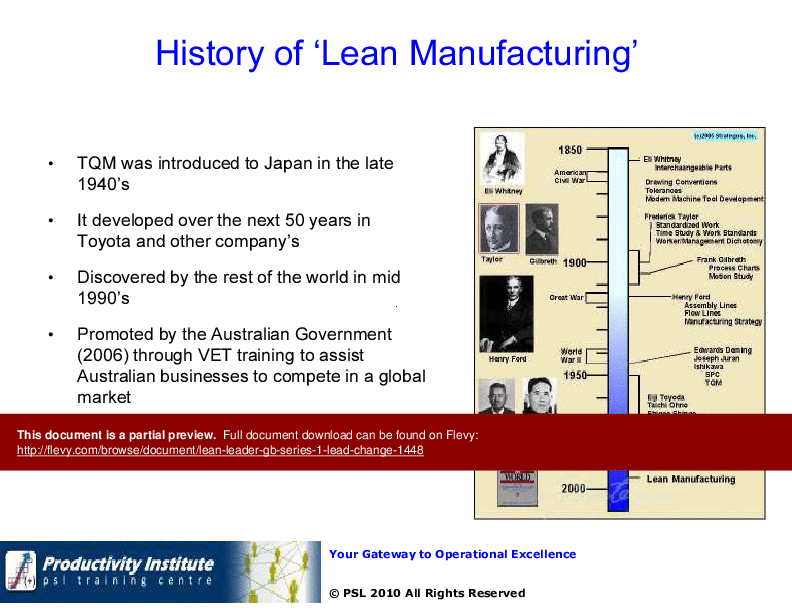
This comprehensive module delves into the core principles of Lean Manufacturing, emphasizing the critical need for continuous improvement and waste reduction. It provides actionable insights on identifying and eliminating non-value-adding activities, ensuring that every step in your process contributes to the overall value. The module also covers the historical evolution of Lean Manufacturing, giving context to its modern applications and benefits.
The training includes practical tools like Gantt charts and action plans to facilitate effective project management and implementation. Participants will engage in hands-on activities such as waste hunts and stakeholder engagement exercises, designed to solidify their understanding and application of Lean principles. This module is essential for leaders aiming to drive operational excellence and foster a culture of continuous improvement within their teams.
Got a question about the product? Email us at support@flevy.com or ask the author directly by using the "Ask the Author a Question" form. If you cannot view the preview above this document description, go here to view the large preview instead.
Executive Summary
The Lean Leader Training Package is designed to empower team leaders and supervisors in manufacturing environments to lead change effectively. This comprehensive training module provides participants with the knowledge, tools, and methods necessary to implement Lean manufacturing principles, enhance team culture, and drive continuous improvement. Participants will engage in practical workplace projects that apply their learning to real-world scenarios, ultimately leading to improved performance and operational excellence. Upon successful completion, participants will receive nationally recognized certification, validating their skills in Lean methodologies.
Who This Is For and When to Use
• Team Leaders in manufacturing sectors
• Supervisors overseeing production teams
• Performance Coaches facilitating Lean initiatives
• Change Agents driving operational improvements
Best-fit moments to use this deck:
• During onboarding sessions for new team leaders
• In workshops focused on Lean transformation initiatives
• When implementing new Lean practices in existing workflows
Learning Objectives
• Define Lean manufacturing principles and their impact on operational efficiency
• Build effective Lean teams that foster a culture of continuous improvement
• Establish key performance indicators (KPIs) to measure success in Lean initiatives
• Identify and eliminate non-value-adding activities within processes
• Engage stakeholders effectively to support change initiatives
• Develop actionable plans for implementing Lean projects
Table of Contents
• Introduction to Lean Manufacturing (page 3)
• Competency Subjects Overview (page 5)
• The Vision for Lean Excellence (page 7)
• Understanding Value in Business (page 10)
• Operational Waste Identification (page 15)
• Change Management Model (page 25)
• Measuring Business Performance (page 35)
• Stakeholder Engagement Strategies (page 45)
• Project Guidelines and Evidence (page 55)
Primary Topics Covered
• Lean Manufacturing Principles - An overview of Lean methodologies that focus on waste reduction and value creation in manufacturing processes.
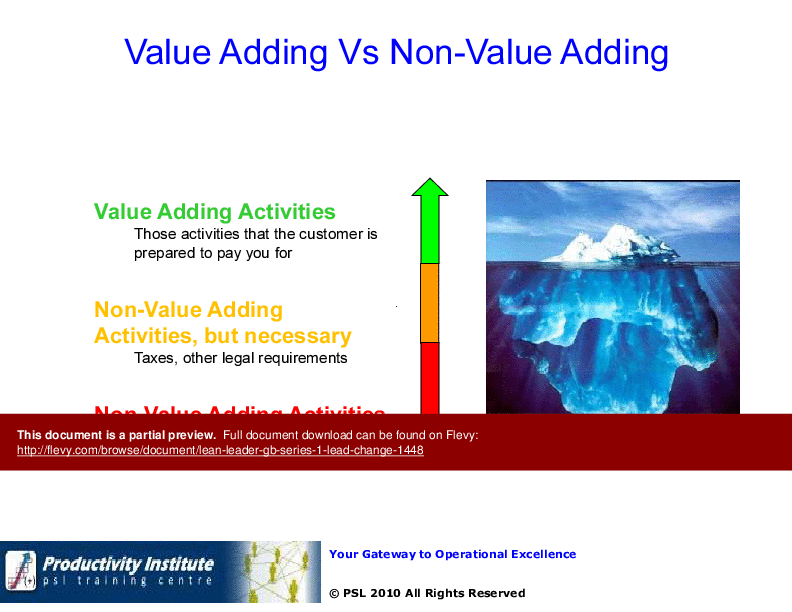
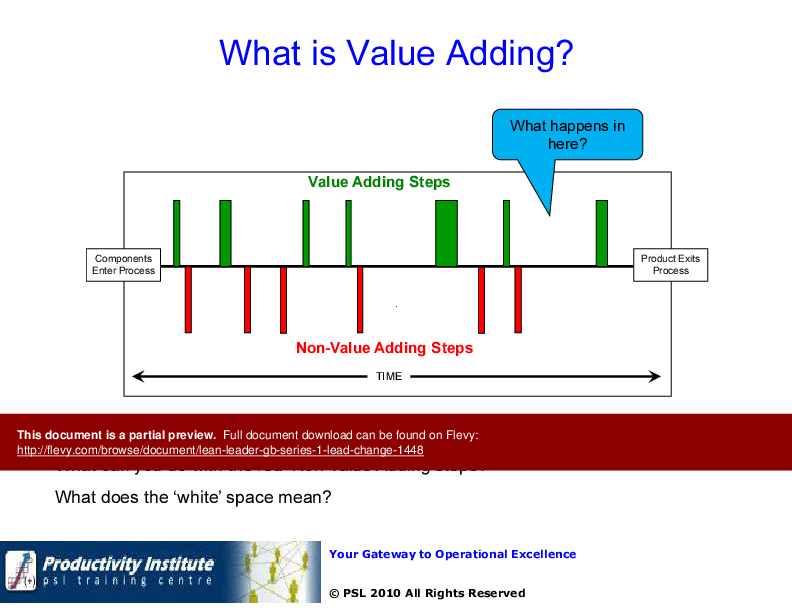
• Value Addition vs. Non-Value Addition - Understanding the difference between activities that add value for customers and those that do not, to optimize resources.
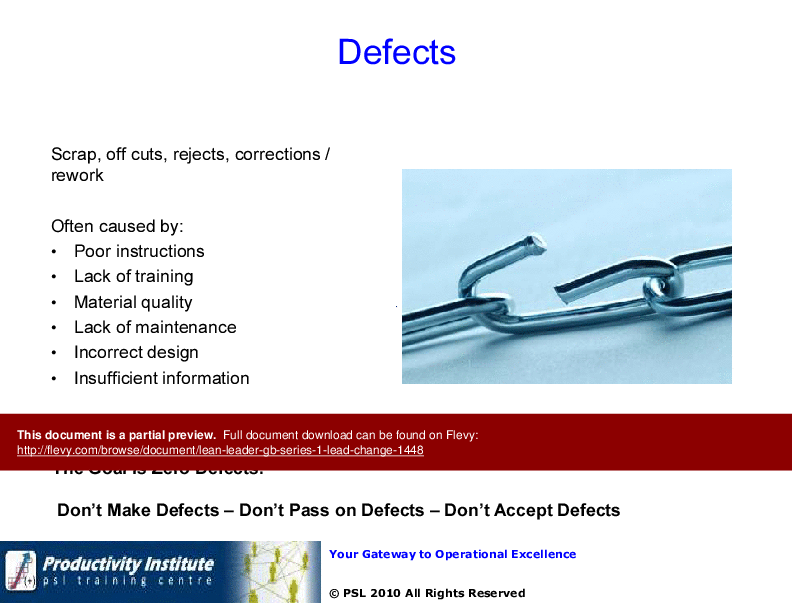
• Operational Waste - Identification of various types of waste (defects, overproduction, waiting, etc.) that hinder efficiency and productivity.
• Change Management - A structured approach to implementing changes in processes, including defining changes, establishing KPIs, and engaging stakeholders.
• Performance Measurement - Techniques for measuring and monitoring performance improvements through KPIs and visual management systems.
• Stakeholder Engagement - Strategies for identifying and managing stakeholders to ensure successful implementation of Lean initiatives.
Deliverables, Templates, and Tools
• Lean Project Plan template for documenting improvement initiatives
• Gantt Chart for scheduling project activities and tracking progress
• Waste Hunt Worksheet for identifying and analyzing waste in processes
• Improvement Opportunity Worksheet to capture and prioritize improvement ideas
• Key Performance Indicator (KPI) templates for measuring project success
• Visual Management System examples for tracking performance metrics
Slide Highlights
• Introduction to Lean Manufacturing overview slide that sets the stage for the training
• Operational Waste identification slide illustrating various types of waste and their impact
• Change Management Model slide outlining the steps for effective change implementation
• KPI Communication Strategy slide emphasizing the importance of clear performance metrics
• Visual Management System slide showcasing tools for monitoring project progress
Potential Workshop Agenda
Introduction to Lean Manufacturing (60 minutes)
• Overview of Lean principles and their significance
• Discussion of participant expectations and goals
Waste Identification Activity (90 minutes)
• Conduct a Waste Hunt in small groups
• Report findings and discuss visible signs of waste
Change Management Overview (60 minutes)
• Introduction to the Change Management Model
• Group discussion on defining changes and establishing KPIs
Project Planning Session (120 minutes)
• Develop project plans using provided templates
• Identify stakeholders and outline engagement strategies
Customization Guidance
• Tailor the project plan template to fit specific organizational needs and processes
• Adjust KPI metrics based on industry standards and organizational goals
• Incorporate company-specific terminology and cultural elements into training materials
Secondary Topics Covered
• Continuous Improvement Practices
• Team Culture Development
• Effective Communication Strategies
• Lean Assessment Techniques
• Benchmarking for Lean PerformanceDocument FAQ
What is Lean Manufacturing?
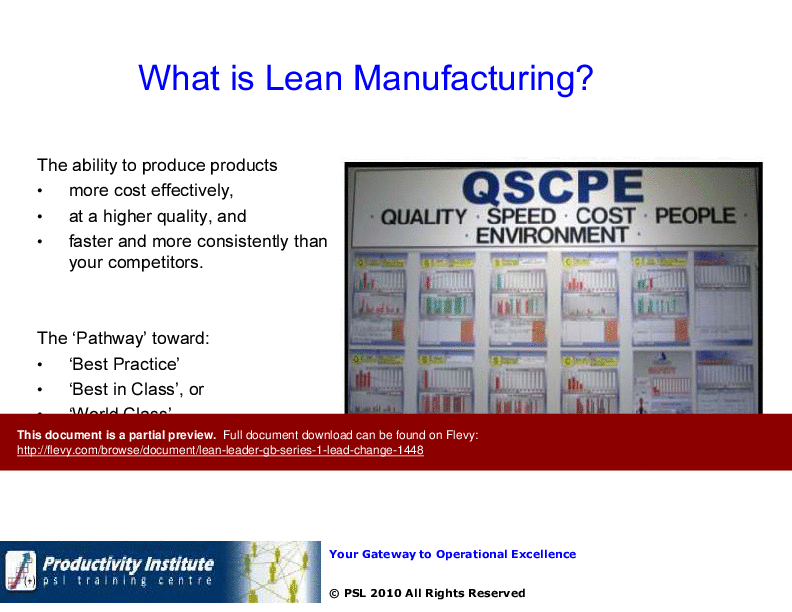
Lean Manufacturing is a systematic approach to identifying and eliminating waste in order to enhance productivity and efficiency in manufacturing processes.
Who should participate in the Lean Leader Training Package?
This training is ideal for team leaders, supervisors, and performance coaches involved in Lean initiatives within manufacturing environments.
What are the key benefits of completing this training?
Participants will gain practical skills in Lean methodologies, improve workplace performance, and receive nationally recognized certification upon successful completion.
How will my progress be measured during the training?
Progress will be measured through participation in activities, completion of project plans, and the establishment of KPIs to track improvement outcomes.
What tools will I receive as part of the training?
Participants will receive templates for project planning, KPI tracking, and waste identification, as well as access to visual management tools.
Can this training be customized for my organization?
Yes, the training materials can be tailored to align with your organization's specific needs, processes, and culture.
What is the expected outcome of the training?
Participants will be equipped to lead Lean initiatives effectively, drive continuous improvement, and foster a culture of operational excellence within their teams.
How long does the training program last?
The training program is structured over multiple sessions, typically spanning several weeks, depending on organizational needs.
What is the significance of stakeholder engagement in Lean initiatives?
Engaging stakeholders is crucial for ensuring buy-in, addressing concerns, and facilitating smooth implementation of Lean changes.
Glossary
• Lean Manufacturing - A methodology focused on minimizing waste while maximizing productivity.
• Value Adding Activities - Tasks that customers are willing to pay for, contributing directly to the product or service.
• Non-Value Adding Activities - Tasks that do not add value to the product or service and should be minimized or eliminated.
• Operational Waste - Any activity that consumes resources, but does not add value to the customer.
• Key Performance Indicators (KPIs) - Metrics used to evaluate the success of an organization in achieving its objectives.

• Change Management - A structured approach to transitioning individuals, teams, and organizations to a desired future state.
• Stakeholder - An individual or group that has an interest in the outcome of a project or initiative.
• Visual Management System - Tools and techniques used to visually communicate performance metrics and project status.
• Waste Hunt - An activity aimed at identifying and analyzing waste within processes.
• Gantt Chart - A visual representation of a project schedule, showing the start and finish dates of various elements.
• Continuous Improvement - Ongoing efforts to improve products, services, or processes.
• Benchmarking - Comparing business processes and performance metrics to industry bests or best practices from other companies.
Source: Best Practices in Change Management PowerPoint Slides: Lean Leader GB Series 1 - Lead Change PowerPoint (PPT) Presentation Slide Deck, OpEx Academy NZ
This document is available as part of the following discounted bundle(s):
Save %!
Lean Leader / Green Belt Training Series - 12 Modules
This bundle contains 12 total documents. See all the documents to the right.
|
Download our FREE Organization, Change, & Culture, Templates
Download our free compilation of 50+ slides and templates on Organizational Design, Change Management, and Corporate Culture. Methodologies include ADKAR, Burke-Litwin Change Model, McKinsey 7-S, Competing Values Framework, etc. |